Blastocyst Culture with expert IVF lab guidance and supportive care
Blastocyst culture is an advanced IVF laboratory process in which embryos are allowed to grow further before transfer or freezing. At Balaji IVF and Maternity Centre, we focus on careful embryo monitoring, personalized treatment planning, and compassionate fertility support.

Specialized IVF Care
Blastocyst Culture
Understanding blastocyst culture in a simple way
Blastocyst culture is an IVF laboratory process in which embryos are grown for a longer period after fertilization so that they can reach the blastocyst stage before transfer or freezing.
This approach allows fertility specialists to observe embryo development more closely and make better-informed treatment planning decisions depending on the patient’s IVF cycle and embryo progress.
Key benefits of blastocyst culture
Longer embryo development observation in the lab
Helpful for embryo selection and transfer planning
Supports personalized IVF treatment strategy
Useful in selected fertility treatment cases
Blastocyst culture in 4 simple steps
The process begins after fertilization and continues through embryo development monitoring, blastocyst formation, and transfer or freezing planning.
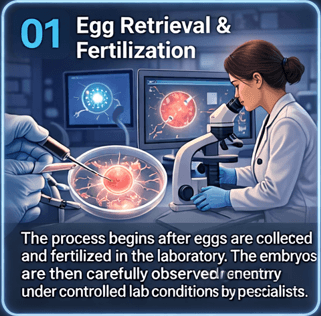
Egg Retrieval & Fertilization
The process begins after eggs are collected and fertilized in the laboratory. The embryos are then carefully observed under controlled lab conditions by fertility specialists.
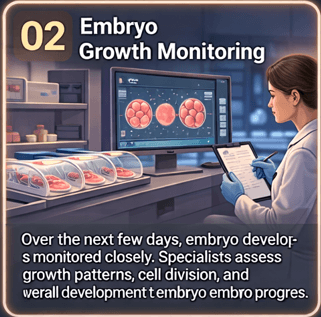
Embryo Growth Monitoring
Over the next few days, embryo development is monitored closely. Specialists assess growth patterns, cell division, and overall development to understand embryo progress.
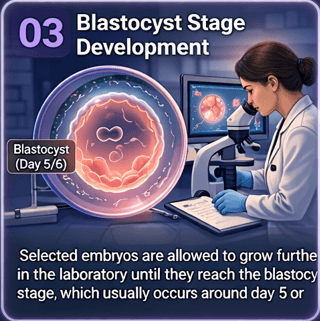
Blastocyst Stage Development
Selected embryos are allowed to grow further in the laboratory until they reach the blastocyst stage, which usually occurs around day 5 or day 6 of development.
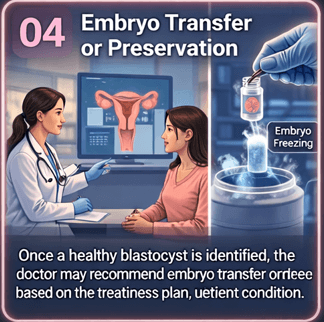
Embryo Transfer or Preservation
Once a healthy blastocyst is identified, the doctor may recommend embryo transfer or freezing based on the treatment plan, uterine readiness, and patient condition.

Blastocyst culture may be considered in these situations
Couples undergoing IVF treatment
Patients who want advanced embryo selection support
Cases where embryo development needs closer observation
Patients with previous IVF failure where embryo quality assessment is important
Couples seeking improved embryo transfer planning
Patients advised by fertility specialists for blastocyst-stage embryo culture
A more supportive and carefully guided IVF lab experience
Advanced IVF Lab Support
Careful embryo culture and monitoring under expert fertility supervision using a patient-focused treatment approach.
Precise Embryo Observation
Embryo development is observed closely so the treatment plan can be guided with greater clarity and confidence.
Personalized Fertility Planning
Every case is evaluated individually so embryo transfer or preservation decisions align with the patient’s IVF treatment plan.
Compassionate Fertility Care
A supportive fertility experience designed to help patients feel informed, reassured, and guided at every stage.
Treatment cost depends on the IVF plan and lab requirements
The cost related to blastocyst culture can vary depending on the IVF cycle, embryo development, laboratory support, and the overall fertility treatment plan recommended by the specialist.
After evaluation, the doctor can explain whether blastocyst culture is suitable and how it fits into the patient’s personalized IVF strategy.
Personalized Guidance
Consultation & IVF Lab Support
Based on individual evaluation
Detailed IVF treatment evaluation
Patient-friendly embryo development guidance
Transfer or freezing planning support
What our patients say
Real experiences from people who trusted your fertility care services.
Frequently asked questions about blastocyst culture
Blastocyst culture is an IVF laboratory process in which embryos are allowed to grow for several days after fertilization until they reach the blastocyst stage, usually around day 5 or day 6.
Blastocyst culture helps specialists observe embryo development for a longer period, which may support embryo selection and treatment planning in IVF cases.
Yes, blastocyst culture is a part of IVF treatment in selected cases. It is used after fertilization when embryos are grown further in the laboratory before transfer or freezing.
No, it is not necessary for every patient. Whether blastocyst culture is recommended depends on embryo development, medical history, and the treatment approach advised by the fertility specialist.
In some cases, extended embryo culture may help specialists assess embryo development more clearly and plan embryo transfer or preservation more effectively.
After blastocyst culture, the doctor may recommend embryo transfer or freezing depending on the quality of the blastocyst, uterine readiness, and the overall IVF treatment plan.
Take the next step
Start your consultation with expert support
Connect with our team to understand your IVF treatment options, embryo development support, and the right fertility care plan for your journey.